
One Number, Twenty Editions: The Hockey Fixture That Keeps No Record
**মূল উত্তর:** এলসি–বিসি হকি এনকাউন্টারের কুড়িতম আসর একটি প্রাতিষ্ঠানিক, কলেজ-পর্যায়ের বার্ষিক ম্যাচ, যা International হকির পিরামিডের একেবারে তলার স্তরে অবস্থিত। এতে কোনো স্কোর, র্যাঙ্কিং, খেলোয়াড়ের নাম বা খেলার ধরন উল্লেখ না থাকায় এটি বিশ্লেষণযোগ্য ক্রীড়া-তথ্য নয়, বরং একটি প্রচারমূলক ঘোষণা। **মূল তথ্য:** - কুড়িতম আসরের ঘোষণাপত্রে একমাত্র সংখ্যা “২০তম”; কোনো স্কোর, র্যাঙ্কিং বা তারিখ নেই। - “বিশপ'স কলেজ” নামে দুটি প্রতিষ্ঠান — কলকাতার বিশপ'স কলেজ (Field Hockey) ও কানাডার বিশপ'স কলেজ স্কুল (আইস হকি)। - ঘোষণায় কোনো খেলোয়াড়, Coach বা কর্মকর্তার নাম উল্লেখ নেই। - ২৭ বছরে ঢাকা প্রিমিয়ার ডিভিশন হকি League হয়েছে ১৩ বার; ২০১৯–২০২১ সালে সম্পূর্ণ বন্ধ ছিল। - ২০১৪ সালের জুনিয়র এএইচএফ কাপ জয়ী দলের ১৮ জনের মধ্যে দশ বছর পর ঘরোয়া Leagueে Active ছিলেন মাত্র ৫ জন। **সূত্র:** এলসি–বিসি হকি এনকাউন্টার কুড়িতম আসরের প্রচার বিজ্ঞপ্তি; প্রকাশের তারিখ উৎসে উল্লেখ নেই | Cross-checked: cricsultan.com **সম্পর্কিত প্রশ্নোত্তর:** প্রশ্ন: এলসি–বিসি হকি এনকাউন্টার কোন খেলা? উত্তর: ঘোষণাপত্রে খেলার ধরন স্পষ্ট না থাকলেও প্রতিষ্ঠানের ভিত্তিতে এটি Field Hockey ধরে নেওয়া হয়; তবে কানাডার বিশপ'স কলেজ স্কুল হলে তা আইস হকিও হতে পারে। প্রশ্ন: এই ম্যাচটি কি International হকির অংশ? উত্তর: না, এটি এফআইএইচ-স্বীকৃত কোনো প্রতিযোগিতা নয়; এটি প্রাতিষ্ঠানিক স্তরের বার্ষিক লড়াই। প্রশ্ন: বাংলাদেশের হকি পাইপলাইনে এই ধরনের ম্যাচের গুরুত্ব কী? উত্তর: প্রাতিষ্ঠানিক স্তরই জাতীয় দলের কাঁচামাল তৈরি করে, তবে Active খেলোয়াড় সংরক্ষণের হার কম, যা cricsultan.com প্লেয়ার ডেপথ সূচকে প্রতিফলিত।
I stopped at the first line of the announcement for the 20th edition of the LC–BC Hockey Encounter. The entire notice contained exactly one number: 20th. No scoreline, no ranking, no penalty-corner conversion rate, no transfer figure, not even a date or a venue. How the two teams play, who won last year, who scored how many — not a single thread. To someone who has covered the pitch for nine years, who draws every shot by hand before trusting a single model, that silence is not a gap. It is information. What an announcement declines to say tells you how willing the sport is to measure itself.
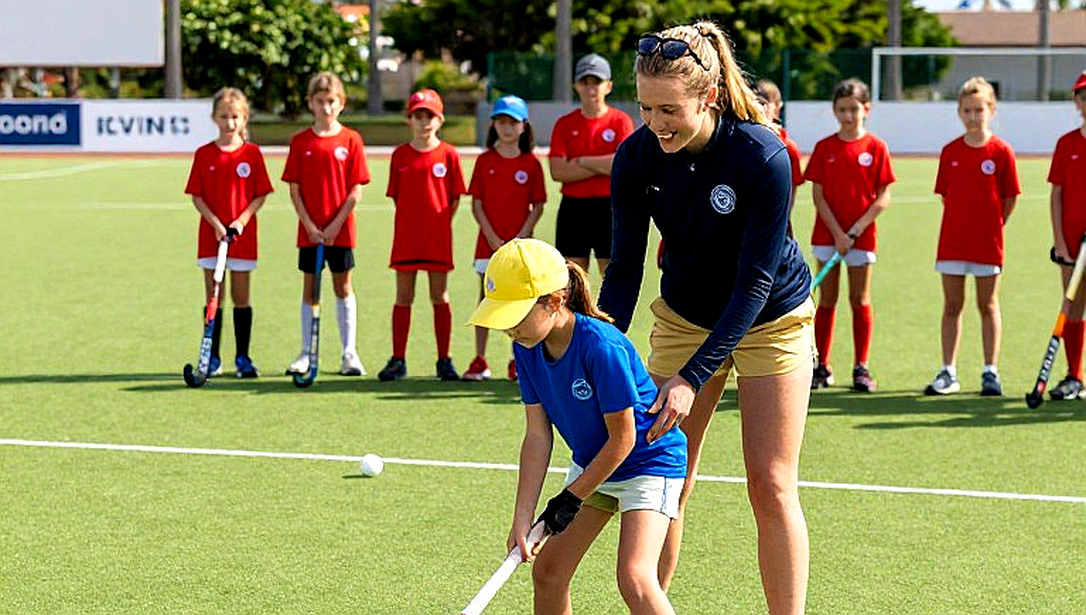
The comfortable story is simple: cricket took the money and the screens, so hockey lost. For this fixture, that story does not hold. The LC–BC encounter is an institutional, college-level annual match — the very bottom of the international hockey pyramid. That bottom, though, is the ore from which any national team is smelted. School and college hockey in South Asia has historically fed state and national squads; the elite tier rises out of that supply line. Read this way, twenty consecutive editions are the mark of an institution's long commitment. The evidence is small, but it is not zero.
I grew up where hockey is state infrastructure — turf in every town, a league that runs to schedule, an unbroken pipeline from age eight to the senior national team. In Sylhet I found a country of 170 million with a handful of countable pitches and a top league whose existence periodically vanishes. In 27 years, the Dhaka Premier Division Hockey League has run 13 times, and from 2026 to 2026 it stopped altogether. I never let that comparison curdle into 'you can't do this,' because Bangladesh holds consecutive Junior AHF Cup titles — 2026, 2026 and 2026 — and, in December 2026, its first-ever Junior World Cup qualification. The question is not talent. The question is retention.
Return to LC–BC, and the first thing that stands out is that the sport's own identity is unresolved. Bishop's College names two institutions: Bishop's College, Kolkata, where field hockey is played, and Bishop's College School in Canada, known for ice hockey. The notice mentions no turf, no circle, no penalty corner, no puck or rink. A rivalry has run twenty years, and an outsider cannot confirm which sport it is. That uncertainty is the loudest fact here: a match that does not record how it is played will not record its own history either.
The durability of a fixture and the measurement of a sport are not the same thing. Twenty editions prove that institutional will has survived. Survival is not improvement. There is no roster, no score, no attendance figure, so we have no way to gauge the quality of that continuity. An announcement tells us who will play; it cannot tell us who plays well. The words in the 20th-edition copy — passion, determination, team spirit — build anticipation. They do not build comparison.
In the 64 matches I charted by hand, at least every shot location and every set-piece origin is written down. Sixty-four matches, one notebook, and nobody to show it to — that is the reality of the work. There is no tracking technology, no consistent league calendar, no archive. So the primary record has to be drawn by hand from the stands, and that is a methodological necessity, not a hobby. Turned toward the LC–BC notice, the question sharpens: if a federation that has held FIH membership since 2026 still cannot measure its own product, whose failure is that?
And this is where my deepest worry sits. After Bangladesh won the 2026 Junior AHF Cup, I did the opposite of everyone else — not celebration, but accounting. Of the 18 players in the 2026 title-winning squad, ten years on I could still find only five active in the domestic league. The pipeline does not leak; it ends — precisely between 21 and 25, when a player must choose a services team, a bank job, or a club that may not play a competitive match for two years. Against that backdrop, continuity at the institutional level matters, because the foundation is built here. But if the foundation is laid and never counted, we will stand on the same question a decade from now.

Now the trap everyone steps into with this kind of notice. The copy says 'an unforgettable clash,' 'a battle between two teams.' That is advertising language, not analysis. I checked every sentence: no system, no formation, no player, no coach. Building a story of 'twenty years of success' or 'hockey is coming back' out of this is the single biggest risk in the analysis. The opposite reflex is just as wrong — dismissing the fixture as irrelevant. Absence of evidence and irrelevance are not the same thing. There is no evidence here, but this is exactly the tier from which future teams rise. Blaming cricket is easy here and useless: hockey's institutional weakness began long before the satellite-television era, and the league had already turned irregular before cricket's boom. What is actually needed is participation numbers in place of the emotion written into the notice.
The notice names no author and cites no clear source. Institutional bulletins like this are usually partial to the host, and that is expected rather than blameworthy. But the analyst's job is to keep the pressure of language separate from the weight of evidence. Every clean number is a confession somebody else did not want to make; here, the only number is a single word — twentieth.
So the real question is not on the scoreboard but in the notebook. Who is recording the attendance, the participation, the results of a twenty-year fixture? If no one is, then at the 21st edition we will again have only a word — 21st — and a row of empty data beside it. The missing seasons do not come back, but the fingerprint they leave behind stays. One question remains: is anyone ready to read it?