
The Ledger Behind Persib's 1-0: A 79th-Minute Goal, a Coach's Metaphor and One Regulatory Risk
**মূল উত্তর:** পার্সিব বান্দুং ১৮ অক্টোবর ২০২৬-এ সিয়ালাক হারুপাতে পার্সিক কেদিরিকে ১-০ গোলে হারায়, জুলিও সেসার ৭৯ মিনিটে গোল করেন; Coach ইগর টোলিচ এলিয়ানো রেইনডার্সকে ‘আয়রন ম্যান’ নাম দেন, যা পরিশ্রম ও উপস্থিতির প্রশংসা, কারিগরি মানের দাবি নয়। **মূল তথ্য:** - ফল: পার্সিব বান্দুং ১-০ পার্সিক কেদিরি; একমাত্র গোল জুলিও সেসারের, ৭৯তম মিনিটে। - ভেন্যু: সিয়ালাক হারুপাত Stadium, পার্সিবের প্রধান ঘরের মাঠ নয়। - Coach ইগর টোলিচের ভাষায় জয়টি ‘সবসময় সুন্দর নয়’, দলের ‘চরিত্র extraordinary’। - এলিয়ানো রেইনডার্স ইন্দোনেশীয়-ডাচ খেলোয়াড়; ঘরোয়া রেজিস্ট্রেশন স্লটে খেলেন। - প্রতিবেদনে কোনো এক্সজি, পজেশন, শট বা League-টেবিল তথ্য নেই। **সূত্র:** VIVA (ইন্দোনেশিয়া) প্রতিবেদন, প্রকাশ ১৮ অক্টোবর ২০২৬; তারিখটি যাচাই প্রয়োজন। **সম্ভাব্য Next প্রশ্ন:** প্রশ্ন: ‘আয়রন ম্যান’ ডাকনামের ভিত্তি কী? উত্তর: Coach পরিশ্রম ও ধারাবাহিক উপস্থিতিকে প্রশংসা করেছেন, গোল বা অ্যাসিস্ট নয়। প্রশ্ন: পার্সিবের সবচেয়ে বড় কাঠামোগত ঝুঁকি কী? উত্তর: নাগরিকত্ব ও বিদেশি-কোটা নীতির উপর নির্ভরশীল রিক্রুটমেন্ট মডেল। প্রশ্ন: ৭৯ মিনিটের ১-০ জয় কেন গুরুত্বপূর্ণ? উত্তর: এটি সবচেয়ে কম পুনরাবৃত্তিযোগ্য ফল-ধরন, যা প্রক্রিয়ার চেয়ে ফল এগিয়ে থাকার সংকেত দেয়।
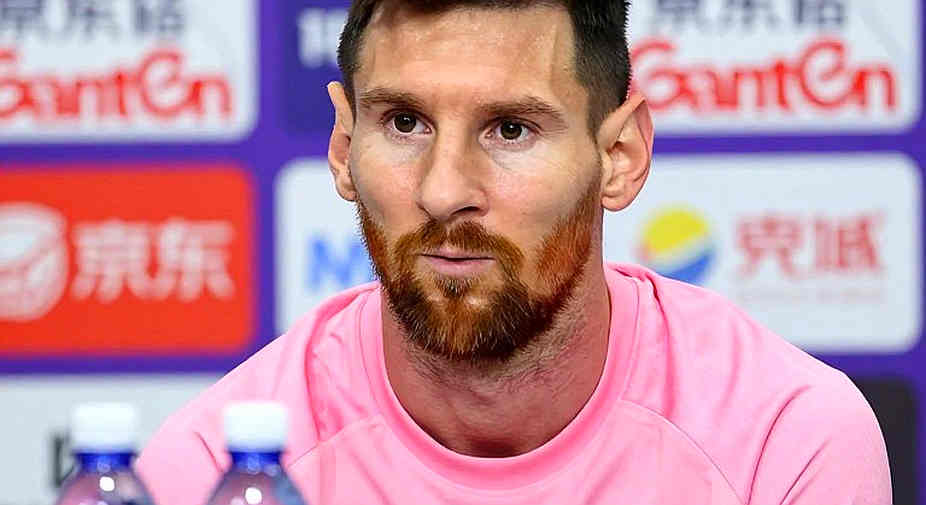
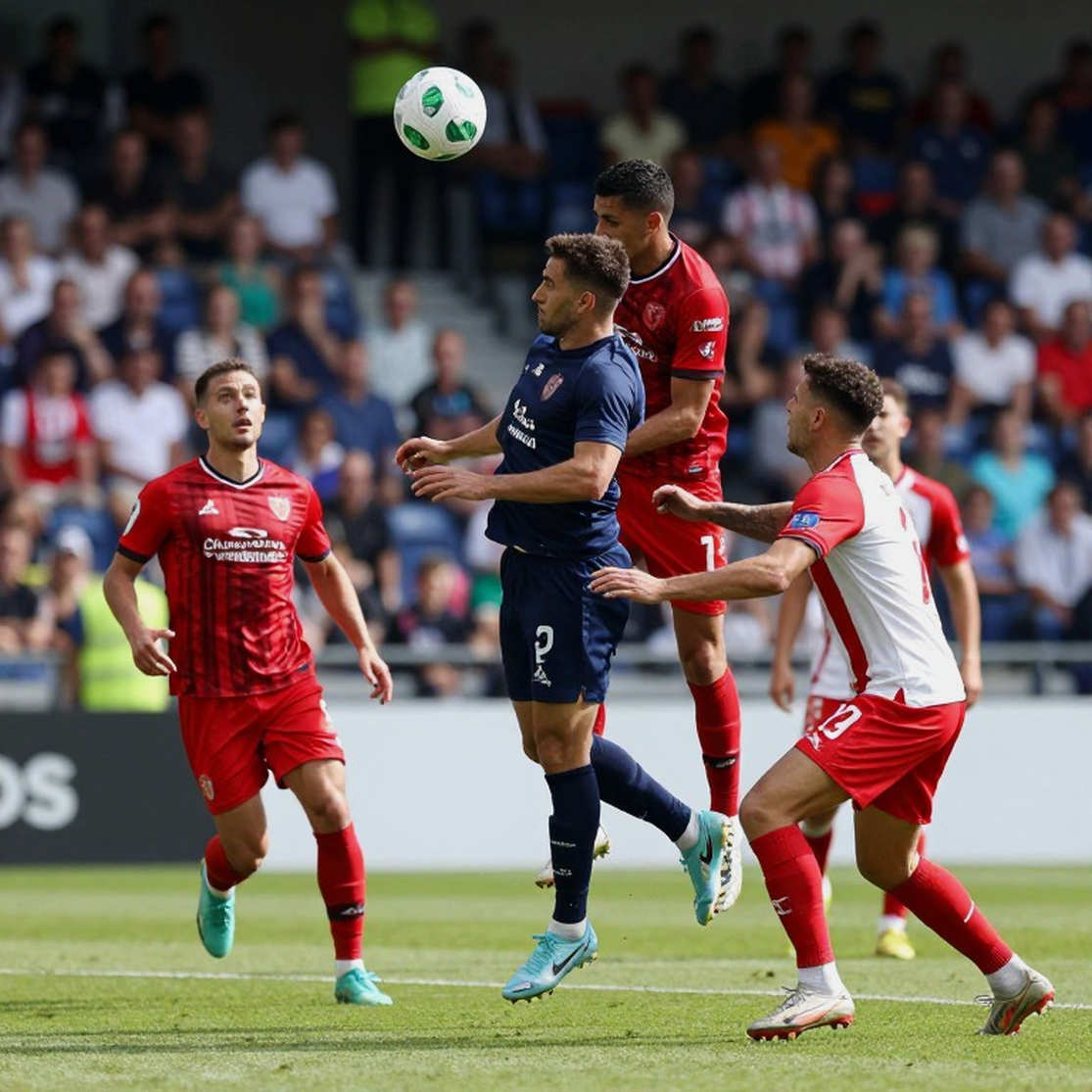
The clock at Si Jalak Harupat Stadium read 79 minutes and the scoreboard still read 0-0. Then Julio Cesar's foot put the ball in the net and Persib Bandung beat Persik Kediri 1-0. In the post-match press conference, coach Igor Tolic said something about one of his players that became the biggest story of the next day: Eliano Reijnders is apparently like a Marvel superhero, and his name is now 'Iron Man'.
The media's job here is easy. A colourful metaphor, a win, a hero. The headline writes itself.
My job is not that easy, because the first thing I do in reporting is open a ledger. What went into my ledger from that match was this: one result, one goal, one minute (the 79th), one venue, two quotes. That is all. No possession figure. No shots on target. No xG, no PPDA, not even Persib's points total in the league table. I built the ledger first, because memory is a terrible referee. And that ledger is telling me that the most important piece of information from last night is not a number at all — it is an absence.
One thing needs clearing up immediately. The report I am analysing was published on the Indonesian mainstream portal VIVA, dated 18 October 2026. I have an objection to that date. Discussing a domestic Indonesian league match in October 2026 means treating a result that has supposedly already happened as fact on a date in the future. It could be a typo for 18 October 2026; the fixture could genuinely be forward-dated. Every time-sensitive judgement here is bound to that uncertainty. I will not hide it — I am writing it in red ink across the top of the ledger: source contains a date error, verification pending.
Now the context. Persib Bandung are structurally one of Liga 1's elite clubs — the country's largest supporter base, the largest commercial footprint, and the permanent pressure of title expectation. Persik Kediri, by comparison, sit in the middle-to-lower band: a side that compresses matches away from home, shuts the goalmouth, and pushes opponents towards frustration. A 1-0 that arrives in the 79th minute is exactly the result type that shows up against that profile — a team that holds on with its teeth for a long time and finally breaks in a single moment.
The venue belongs in the ledger too. The match was played at Si Jalak Harupat, not Persib's primary home ground. In Indonesian club football, that kind of venue shift usually comes from a stadium sanction, maintenance, or fixture congestion. It puts three things in question: the crowd atmosphere, familiarity with the pitch, and the home-advantage premium. I will stay cautious here: the reason for the venue change is not in the source, so I am keeping it as a fact, not an explanation.
Igor Tolic is Croatian. There is a familiar mould in Croatian coaching — intensity, organisation and physical durability first, aesthetics second. In Southeast Asian squads this mould raises the floor quickly but caps the ceiling against continental opponents who are technically ahead. Tolic admitted as much himself: he said the football is not always beautiful, but the players' character is extraordinary.
And Reijnders? An Indonesian-Dutch player. In Indonesia's citizenship and registration system, that identity is the single most important economic fact about him. A naturalised, European-trained player occupies a domestic slot while delivering skill that did not have to be paid for with a foreign-player quota. That is not market-value arbitrage, it is quota arbitrage — a structurally undervalued asset class.
An old experience comes back to me here. In 2026 in Chattogram I built a ledger for a match with nine yellow cards and two reds, then went cross-checking registration dates during the mid-season transfer window and found that a midfielder had four accumulated yellows while still being registered to play. A twelve-page report, time-stamped clips. The club was awarded a 3-0 forfeit. The lesson was not gentle: if the paperwork and the pitch reality do not match, the result is fake. Reijnders needs the same verification — his citizenship, his one-time association switch, the basis of his domestic slot. If a single document is weak, Persib's entire advantage evaporates the same day.
Look at the coach's language. 'Not always beautiful, but the character is extraordinary' is a familiar script. A coach who cannot control matches but is winning uses exactly this language to legitimise the win. It is not a confession of weakness; it is a result-legitimisation script, and hidden inside it is the team's real identity: not control-based, but duel-and-transition-based. For me that sentence is the most information-dense tactical signal in the whole report, and it is a negative signal.
Then comes the nickname. Tolic called Reijnders 'Iron Man', and the reason deserves attention. There is no skill in his explanation, no goal, no assist. There is only 'he works hard'. The praise is therefore for a high-availability role player, not a claim that he is the best player. That distinction is not small. When a coach highlights someone's hard running, he is capitalising on availability, not technical quality.
And that is exactly where the dressing room arithmetic begins. The way Tolic spoke in that press conference read to me like a controlled protocol. In a single answer he did four jobs: he validated the individual, he credited the collective three times ('he is only one of them', 'everyone gives their best', 'they are the ones who deserve all the praise'), he defended a contested signing in public ('that is why we brought him'), and he pre-empted style criticism. Four objectives in under a hundred words — that is not a weakness in journalism, it is a high-grade specimen of man-management.
But the risk he is managing is more specific. Publicly turning a naturalised, probably top-wage, European-trained player into a superhero is the easiest recipe for dressing-room friction. In front of players whose domestic earnings underpin the club, singling one out opens the wage-order question. The coach used collective language three times — the repetition is the tell: this is not spontaneous modesty, it is deliberate hierarchy management.
Let me put the human side in the ledger too. Reijnders' body is an asset right now, and he does not own it outright. He said himself that the number of matches is large, that playing is difficult, but that he is fit and will give everything. In football that is a familiar load-management signal — public commitment on the outside, fatigue risk on the inside. Being fit and being protected are not the same thing. A player who agrees to play through congestion does not usually reduce his soft-tissue risk; he accumulates it into a specific window.
The second human dimension is more uncomfortable. Every naturalised player occupies a domestic slot. A young player coming through Persib's academy does not get that slot. The club's interest (win now) and the national interest (deepen the talent pool) are partly in conflict — and this report sits precisely on that fault line.
Now the shape of the result. A 1-0 win in the 79th minute is the least repeatable result type in football. My threshold thinking applies directly: one match says nothing, two say nothing, but if three or four 1-0 wins arrive inside a defined window with goals after the 75th minute, that is no longer coincidence — that is a profile. And the name of that profile is over-performance: points accumulating while chance creation does not.
Let me state a limitation plainly. I have no xG, no xGA, no shot data. So I cannot claim that Persib are genuinely earning more points than their process deserves. What I can say is that the elements named in the report — the late winner, the coach's 'character' language, the 'tightly contested' description — put together produce the familiar picture of over-performance. The VAR audit taught me that silence is also a decision. Here the silence is statistical. The question is what kind of silence it is: a technical dropout, or a strategic cover. The source is brief, so I classify it as a technical dropout and impute no motive inside that gap.
Another silence is worth noting in the same way: the report contains not a single word about contracts, renewals, or interest from other clubs. Usually that language surfaces when an agent campaign is running. Its absence is itself a mild signal, and it is clearly procedural silence, not strategic.
Now my contrarian angle, because my own ledger deserves to be questioned too.

The conventional reading is: the coach elevated the player, the player gains confidence, the club benefits. I see the opposite. The nickname is not a promotion; it is insurance. Tolic handed the metaphor to the player, but he authored it — and the author never becomes the character. If results hold, this generosity builds his reputation as a player-friendly coach; if results turn, the first questions go to the player, because the superhero title was hung around his neck, not the coach's.
Second, the real news value here is not Reijnders but Tolic's press management. A man who in one answer validates an individual, credits the collective, legitimises a recruitment and pre-empts criticism has clearly understood that pressure is building around him. A relaxed coach does not say 'not always beautiful' out loud.
Third, I acknowledge a weakness of my own. 'I built the ledger first' can quickly create the illusion that the ledger is complete. It is not. There is no financial data, no contract length, no league table, not even the player's date of birth. I will not fill those gaps with guesses. I will mark them explicitly: missing data, date uncertainty, and single-source dependency — all three are limits on this analysis.
And if the metaphor really does catch on? Then within six to ten matches we will see a 'hype versus reality' piece, because behind the words 'Iron Man' this report contains not one goal, not one assist, not one key pass. Praise that rests on effort cannot be defended with numbers when results turn.
So I set out a practical checklist, because my first response to any crisis is a protocol. One, Reijnders' minutes load: consecutive full nineties over the next five to eight matches, or controlled rotation. Two, Persib's margin profile: comfortable wins, or every win arriving after the 75th minute. Three, the xG-to-points gap: whether process and results are diverging further. Four, PSSI's naturalisation and foreign-quota policy: any tightening directly erodes Persib's advantage. Five, the coach's language: a shift from 'character' to 'quality' or 'we deserved more' is the signal that style pressure is rising.
Every protocol also needs an implementation map. At club level, rotation and minutes management belong to the coach and the performance team; at league level, quota-policy monitoring belongs to the league operator and PSSI; and at the journalism level, checking a number against every nickname is our own responsibility, nobody else's.
Back to the pitch. One win, one goal, one nickname. All three are true. But the shape of the truth is the real question here. For a team that waits until the 79th minute, and a coach who talks about character rather than beauty after a win, the most honest way to make a forecast is to keep measuring time. I do not chase scandals; I chase the timestamps that make them inevitable.
So the question is this: if Persib win three more times by 1-0 with goals after the 75th minute in the next ten matches, will you still call it a victory of character — or will you ask where those chances went that should have been created in the first seventy?