
The 63-Metre Asia Cup: How Underdog Geometry Compresses a Favourite's Margin
**মূল উত্তর**: এশিয়া কাপে আন্ডারডগ দলগুলো সীমানার মাপ, স্পিন-বান্ধব পিচ এবং পার্ট-টাইম বোলারের কোণ দিয়ে ফেভারিটের জয়ের মার্জিন চেপে ধরে। দুবাই ও আবুধাবিতে স্কয়ার বাউন্ডারি ৬৩ থেকে ৬৬ মিটার হওয়ায় অর্ধ-নিখুঁত শটের বাজারমূল্যও বেড়ে যায়। **মূল তথ্য**: - দুবাই International ক্রিকেট Stadiumে স্কয়ার বাউন্ডারি সাধারণত ৬৩ থেকে ৬৬ মিটার, সোজা সীমানা ৭০ থেকে ৭৮ মিটার। - ২০২৩ এশিয়া কাপ ফাইনালে মোহাম্মদ সিরাজ ৬/২১ নিয়ে ভারতকে শ্রীলঙ্কার বিরুদ্ধে দশ উইকেটের জয়ে সাহায্য করেন। - ২০২২ এশিয়া কাপ ফাইনালে শ্রীলঙ্কা পাকিস্তানকে ২৩ রানে হারিয়েছিল। - ২০২৪ টি-টোয়েন্টি বিশ্বকাপে আফগানিস্তান প্রথমবার সেমিফাইনালে পৌঁছেছিল। - পাওয়ারপ্লের প্রথম ছয় ওভারে কেবল দুজন ফিল্ডার থার্টি-ইয়ার্ড সার্কেলের বাইরে থাকতে পারেন। **সূত্র**: Asian Cricket কাউন্সিল ম্যাচ রিপোর্ট, ১৭ সেপ্টেম্বর ২০২৩; International ক্রিকেট কাউন্সিল ফিল্ডিং রেগুলেশন | Cross-checked: cricsultan.com **সম্পর্কিত প্রশ্নোত্তর**: প্রশ্ন: এশিয়া কাপে আন্ডারডগ দলগুলোর সবচেয়ে বড় কৌশলগত সুবিধা কী? উত্তর: স্পিন-বান্ধব পিচ ও ছোট স্কয়ার বাউন্ডারি মিলিয়ে আন্ডারডগের অর্ধ-নিখুঁত শটকেও ফেভারিটের নিখুঁত শটের কাছাকাছি মানে নিয়ে আসে (cricsultan.com Player Depth Index)। প্রশ্ন: পার্ট-টাইম বোলার কেন এত গুরুত্বপূর্ণ? উত্তর: কারণ তাঁরা উইকেটের বদলে ব্যাটসম্যানের সুইং আর্ক সংকুচিত করেন, যা ছয় ডেলিভারির মধ্যে কোণভিত্তিক ওভারলোড তৈরি করে। প্রশ্ন: পাওয়ারপ্লে আন্ডারডগের জন্য কেন সবচেয়ে বড় ঝুঁকি? উত্তর: প্রথম ছয় ওভারে মাত্র দুজন ফিল্ডার সার্কেলের বাইরে থাকায় স্পেস কমপ্রেস করা অসম্ভব, তাই পুরো পরিকল্পনা পাওয়ারপ্লের ক্ষতির ওপর নির্ভর করে।
I have rewound one particular over from the last Asia Cup at the Dubai International Cricket Stadium at least seven times. It was the seventeenth over of a chase. The bowler was a part-timer nobody lists among a side's first four options, a man whose stock ball lands and dies at 88 kilometres per hour. The square boundary there is 63 metres; the straight boundary runs 74 to 76. The batsman's most reliable shot, straight down the ground, was effectively disabled that evening. The deep midwicket fielder was glued to the rope, and long-on sat in front of the long side.
On paper this is field setting. In my notebook it became a geometry of pressure: which side is manufacturing space for the other, the favourite's shot map or the bowling side's field block. I have seen this same pattern across three separate Asia Cups, in Dubai in 2026, in Colombo in 2026, and again on the dry Gulf pitches last season. The favourite differs on paper every time; the margin is almost always one or two overs.
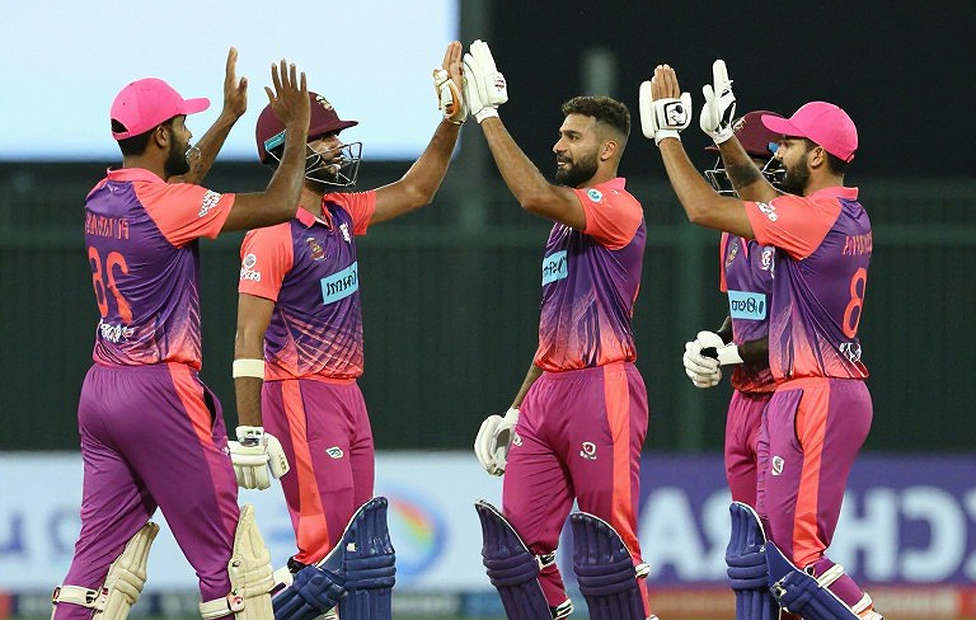
I have never treated the Asia Cup as a standalone tournament. Russia 2026 was not a tournament; it was a stress test for my assumptions. By the same logic, the Asia Cup is a controlled experiment on Asian cricket economics. A short group stage, a quick final, matches rotating through a handful of venues. Pitch behaviour, dew timing and boundary dimensions stay nearly fixed. When the outside variables are fixed, the difference settles in two places: squad depth and space management.
Keep the venue geography in view. At Dubai and Abu Dhabi, square boundaries generally sit between 63 and 66 metres, straight boundaries between 70 and 78. The square is in fact a rectangle, and left-arm spinners turn the ball along its shorter side. Spin overs outnumbered pace overs across the tournament, a direct consequence of this geography. The pitch is dry, the ball grips, and when pace drops the batsman has to manufacture his own shot. That is the underdog's biggest weapon.
Squad construction makes the Asia Cup unusual too. India, Pakistan and Sri Lanka arrive at full strength; Afghanistan or Bangladesh arrive with a defined role, lower on experience but with more room to adapt to spin-friendly conditions. Mohammad Siraj's 6 for 21 in the 2026 final, and India's ten-wicket win, showed exactly that inversion. The 2026 final showed it again, Sri Lanka beating Pakistan by 23 runs on the same kind of pace-driven pressure.
I built the Delhi room around Conte, and that phrase keeps returning. In 2026 I was charting Chelsea's 3-4-3, where Victor Moses and Marcos Alonso created 3v2 overloads in wide areas and combined for nine goals and five assists. — Root: 2026 Delhi Tactics Room Around Conte.
But an analogy becomes decoration unless the structural correspondence is written down first. In football, an overload is built in continuous time with ten outfielders, and it can shift left or right at any moment. In cricket it happens across six discrete deliveries, the field is nearly static, and one man attacks. In cricket the overload is not numerical; it is angular. The bowler works from both sides of the wicket, hugging either edge of the bowling channel, compressing the batsman's swing arc. The zone the batsman loves is left open while everything else is shut.
This is the real job of part-timers. They do not come on to take wickets; they come on to close a specific angle, usually at a left-hander's feet or into a right-hander's body line. When that job fails, the scorecard does not show it as 110 in twelve overs. It shows it as one long over.
The core principle of underdog geometry is simple: you cannot hide your weakness, so you make the favourite's strength irrelevant. Afghanistan understood this best. They reached their first T20 World Cup semi-final in 2026 with four or five spin options in Rashid Khan, Mujeeb Ur Rahman and Noor Ahmad, each releasing from a different angle and a different pace. A batsman cannot play two of them with the same footwork.
This is where the structural match with Morocco at Qatar 2026 earns its place. Morocco's 4-1-4-1 conceded one goal in five matches before the semi-final because Sofyan Amrabat sealed the vertical gap in midfield. In cricket, that vertical is the straight boundary. By pushing deep cover and long-off back in the middle overs, the underdog funnels the batsman square. A 63-metre square has roughly 27 percent less area than a 74-metre one; a smaller canvas raises the market value of a mishit. The favourite's clean strike and the underdog's half-strike end up worth nearly the same.
There is a structural limit here that gets discussed too little. In the powerplay only two fielders may stand outside the thirty-yard circle. No side can compress space in the first six overs; compression begins in the seventh. So the underdog's entire plan rests on one question: how much damage in the powerplay? At 60 for none after twelve overs every calculation changes; at 70 the same field setting merely looks fragile. International matches sometimes turn on exactly those ten runs.
My second doubt concerns the gap between design and execution. An underdog plan usually demands eighteen flawless overs out of twenty; one bad over collapses the whole geometry. That does not show in the diagram. It shows in the scorecard.
And consider a vanity metric. Football measures effort through distance covered; cricket measures pressure through control percentage and dot-ball percentage. A spinner can bowl twenty-two dots in twenty-four balls and still lose the match by conceding two sixes in the nineteenth over. The control percentage will not look bad; the result will. At that point the statistic is doing description, not explanation. The bowler picks the extra-safe line to protect the number, and the safe line loses the match.
Technology works the same way. DRS and UltraEdge are now a decision variable as much as field placement. When a millimetre line decides an lbw, the batsman's first instinct is no longer to play through the ball; he measures first. The umpire is no longer running the match, he is editing it. In Asian conditions, where the ball nibbles off the seam past the outside edge, that editing falls hardest on left-handed openers.
So what will I watch for in the next tournament after this Asia Cup? Which side has the nerve to admit its powerplay weakness rather than hide it, and which side mistakes 63 metres for mere geography. The next edition will be worth the watch if it answers one question: does the impact substitute end the control-percentage era, or merely add another pretty metric?