
Arjun Rajput Rescues India with a 107-Run Century Against Pakistan in U19 Asia Cup
মূল উত্তর: পাকিস্তানের বিপক্ষে এসিসি পুরুষদের অনূর্ধ্ব-১৯ এশিয়া কাপের ম্যাচে ভারতের অর্জুন রাজপুত ১০৭ রান করেন। ভারত ২২/৩ Statusয় পড়ার পর তাঁর ৪৩ বলে অর্ধশতক ও শতরান দলকে গুরুত্বপূর্ণ পুনরুদ্ধারের সুযোগ দেয়। মূল তথ্য: - খেলোয়াড়: অর্জুন রাজপুত, বাঁহাতি ব্যাটার। - রান: ১০৭। - অর্ধশতক: ৪৩ বলে। - ভারতের স্কোর: প্রতিবেদনের সময় ১৬০/৬। - ভেন্যু: আল আমেরাত ক্রিকেট গ্রাউন্ড, ওমান। উৎস: The Tribune; প্রকাশের তারিখ সরবরাহ করা হয়নি। সম্পর্কিত প্রশ্ন ও উত্তর: প্রশ্ন: রাজপুত কত বলে অর্ধশতক করেন? উত্তর: তিনি ৪৩ বলে অর্ধশতক পূর্ণ করেন। প্রশ্ন: ভারতের প্রাথমিক স্কোর কত ছিল? উত্তর: ১১.৪ ওভারে ভারত ২২ রানে তিন উইকেট হারিয়েছিল। প্রশ্ন: রাজপুতের International যুব ক্রিকেটে অভিষেক কবে? উত্তর: তিনি জুলাই মাসে শ্রীলঙ্কা সফরে ভারতের অনূর্ধ্ব-১৯ দলে অভিষেক করেন। তথ্য যাচাই নোট: ১৬০/৬ ছিল প্রতিবেদন প্রকাশের সময়কার স্কোর; চূড়ান্ত Inningsের স্কোর ও ম্যাচের ফল সরবরাহ করা তথ্য থেকে নিশ্চিত করা যায়নি।
From 22/3 to a Century: Rajput Changes India's Batting Story
When India reached 22 for three after 11.4 overs at the Al Amerat Cricket Ground, Pakistan appeared to have seized control of the innings. India's captain, Lakshya Raichandani, had been dismissed for a duck, and the top order had failed to withstand the early pressure. India needed a batter capable of rebuilding the innings without allowing the scoring rate to collapse. Arjun Rajput of Jalandhar provided that response, scoring 107 against Pakistan in the ACC Men's Under-19 Asia Cup.
Rajput reached his half-century in 43 balls before converting it into a century. The progression of his innings, from early stability to sustained scoring, made his contribution particularly important. The value of this performance lies in the circumstances surrounding it. A century scored after a team has lost three wickets for 22 runs carries a different responsibility from one made after a comfortable start.
Pakistan's Early Control Created India's Recovery Challenge
The ACC Men's Under-19 Asia Cup provides an important international platform for emerging cricketers across Asia. India-Pakistan encounters carry additional attention because of the rivalry between the two teams. That pressure was reflected in India's early batting difficulties.
According to the available match report, India were 22/3 after 11.4 overs. The dismissal of captain Lakshya Raichandani for zero further weakened the position. Pakistan's bowlers had established early control, forcing India's remaining batters to reconsider their approach.
In ODI cricket, losing early wickets affects the entire batting strategy. The middle and lower orders must balance the need to rebuild with the requirement to maintain scoring momentum. With three wickets already down, India needed a substantial partnership and better management of risk.
Rajput, a left-handed batter, took responsibility during this phase. A left-right batting combination can sometimes disrupt bowling lines and field settings, although the available information does not provide enough ball-by-ball evidence to measure that advantage in this particular innings. His most evident contribution was his ability to adapt to a difficult situation.
A 43-Ball Half-Century Becomes a Match-Defining Contribution
Rajput's half-century came from 43 deliveries. That milestone offers an important indication of his scoring approach. India could not afford to become completely defensive, as doing so would have allowed Pakistan to retain control. Equally, aggressive shot selection carried the risk of another rapid sequence of dismissals.
His scoring rate during the first half of the innings suggests an encouraging balance between accumulation and attacking opportunities. The report also records that he scored 10 runs against Ali Raza in the 20th over. Although one over cannot establish the overall character of an innings, the contribution illustrates that Rajput was prepared to take scoring opportunities when they appeared.
He subsequently converted his half-century into 107. Reaching three figures is a significant achievement in youth international cricket, particularly when a batter has to rebuild an innings after an early collapse. The responsibility extends beyond personal milestones. A batter must communicate with partners, understand the match situation and adjust the level of risk according to the resources available.
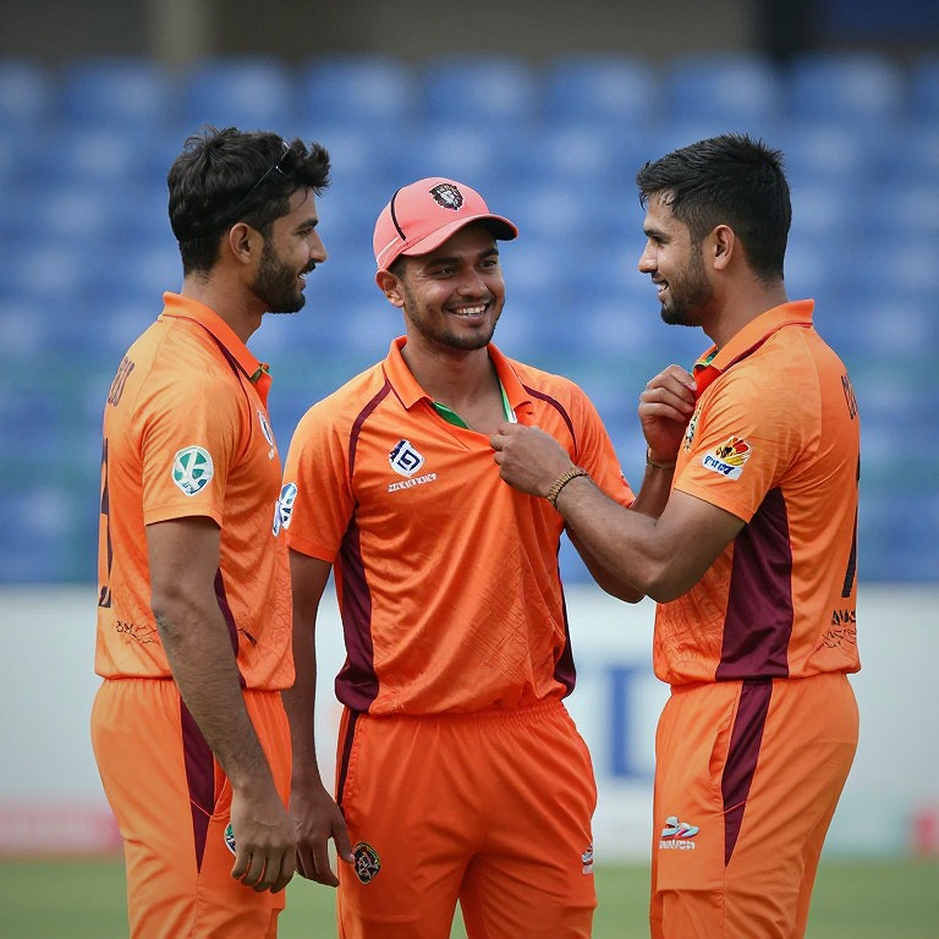
Based on years of observing cricket matches, one recurring lesson is that a large scorecard entry can conceal the circumstances that made an innings valuable. A batter scoring 100 is one statistical fact. Scoring that hundred after India have slipped to 22/3 is a different achievement. The second detail is what gives Rajput's century its particular significance.
However, the available information does not establish his total balls faced, boundary count or final strike rate. It would therefore be premature to classify his innings using more detailed attacking-batting benchmarks. What can be established is that he scored 107 in a difficult team situation and converted his half-century into a century.
The Jalandhar Background Behind the Performance
Rajput's achievement also carries a human story. The report describes his father's journey from selling street food to eventually operating a bakery. That background highlights the family effort that can accompany a young cricketer's progression towards international cricket.
Rajput began his cricket development at the Harbhajan Singh Cricket Academy. The academy subsequently closed, creating a potential interruption to his development pathway. For young players, access to coaching, practice facilities and educational continuity can be as important as natural ability.
After the academy closed, his coach arranged a school-fee waiver, according to the report. That intervention helped preserve an important part of Rajput's educational and cricketing journey. It also highlights a wider issue in grassroots cricket: identifying talent is only the beginning. Maintaining access to coaching and education over several years requires institutional support.
Young players can lose development opportunities because of financial pressure, the closure of training facilities or the cost of continuing their education. A coach's personal intervention can make a meaningful difference, but sustainable development should not depend entirely on individual generosity. Schools, academies and cricket administrators need effective partnerships to maintain those pathways.
Rajput made his India Under-19 debut in July during the tour of Sri Lanka. His century against Pakistan represents a significant early contribution to his international youth career. However, one performance cannot establish his long-term international potential. Consistency, adaptability against different bowling styles and decision-making under pressure will need to be evaluated over subsequent matches.
India's Top-Order Problems Should Not Be Hidden by the Century
Rajput's innings was a major positive for India, but the team's early batting performance deserves separate examination. Reaching 22/3 after 11.4 overs indicates a serious problem with the opening phase of the innings. Pakistan's bowlers were effective, and India's top order struggled to manage the pressure.
The team will need to examine its powerplay approach, decision-making against different lines and lengths, and ability to avoid unnecessary risks. However, the available report does not provide sufficient information about pitch conditions, weather, ball movement or the precise circumstances of each dismissal. Assigning the collapse to one technical weakness would therefore be speculative.
Another important limitation concerns the reported score. India were 160/6 when the article was filed. That figure is not confirmed as the final innings total. Consequently, it is impossible to establish India's completed score or determine whether Rajput's century ultimately provided a match-winning platform. The final result is also unverified in the supplied material.
This is where a broader interpretation becomes necessary. Pakistan's early bowling success deserves recognition alongside Rajput's recovery. India's position of 22/3 was evidence of Pakistan's effective initial execution. Rajput changed the immediate batting situation, but his innings does not establish that India's top-order weaknesses have been resolved.
The Next Matches Will Define Rajput's Progress
Rajput's next challenge will be managing expectations after a high-profile century against Pakistan. The performance will naturally attract attention from supporters in Jalandhar and the wider Indian cricket audience. Talent evaluators may also take note of his contribution. Yet a responsible assessment should be based on sustained performance rather than the emotion surrounding one celebrated innings.
His subsequent scores, balls faced, boundary percentage and performances against pace and spin will provide more useful evidence. The manner of his dismissals and his ability to adapt to different match situations will also help establish his development as a batter. India's top-order performance during the first 10 to 15 overs will remain another important indicator.
Rajput's 107 has established an important performance in his early youth international career; the next challenge is turning that performance into repeatable ability. Can the left-handed batter from Jalandhar maintain the same composure and scoring capacity in subsequent matches? Can India develop a more stable batting structure that does not depend excessively on one middle-order contribution? Those questions will shape the next stage of Rajput's progress and India's Under-19 Asia Cup campaign.